
Why the Necessary & Proper Clause a Source of Ongoing Debate
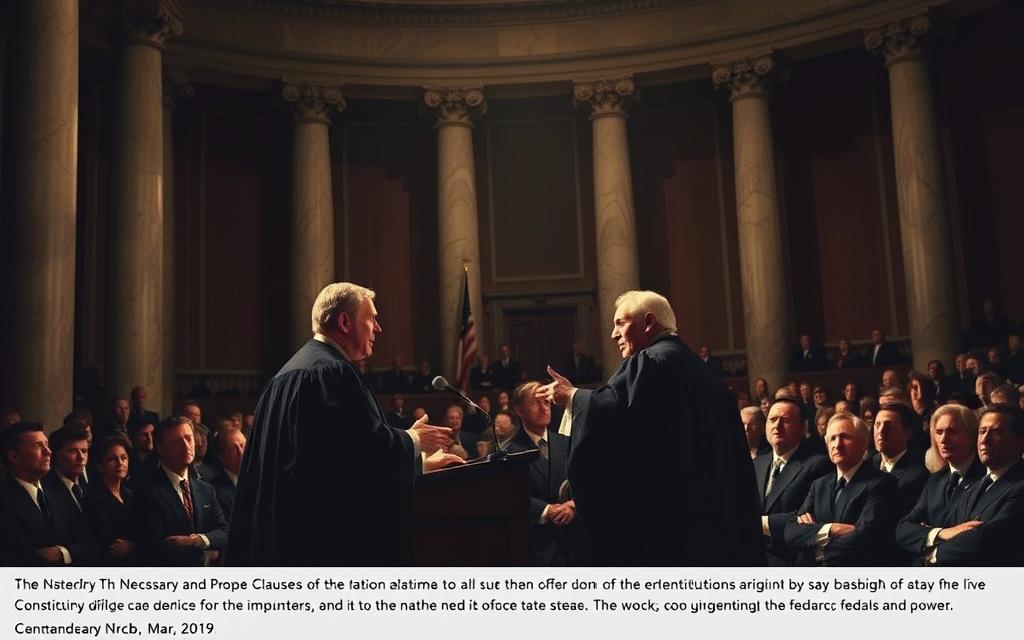
Since 1789, one 16-word sentence in Article I has fueled endless legal battles. Congress holds authority to “make all Laws which shall be necessary and proper” for executing its powers. This phrase transformed from ink on parchment into a battleground for defining federal reach.
Alexander Hamilton saw it as a tool for national progress, while Thomas Jefferson warned against overreach. Their clash over creating a national bank in 1791 set the stage for centuries of disputes. Chief Justice John Marshall later cemented its broad interpretation in McCulloch v. Maryland, declaring Congress could use “means which are appropriate” to achieve constitutional goals.
Modern courts still wrestle with this elastic provision. From healthcare reforms to infrastructure projects, judges weigh whether laws truly serve “execution of the foregoing powers.” The clause’s ambiguity forces constant reexamination of federal-state boundaries.
Key Takeaways
- Foundational constitutional provision enables Congress to implement core functions
- Historic Hamilton-Jefferson dispute established competing interpretive frameworks
- 1819 Supreme Court ruling expanded federal authority through implied powers
- Modern applications range from healthcare laws to transportation systems
- Continual legal challenges reflect evolving views on government responsibility
Historical Foundations of the Necessary and Proper Clause
America’s first leaders clashed over federal authority before the ink dried on the Constitution. This disagreement centered on interpreting Congress’s ability to enact laws supporting its enumerated powers.
Founding Figures: Hamilton and Jefferson
Alexander Hamilton championed flexible governance. He argued Congress could establish institutions like the First Bank using implied powers under Article I. His 1791 defense claimed such measures helped execute tax collection and debt management.
Thomas Jefferson countered with strict constructionism. He warned against expanding federal reach beyond explicitly granted authorities, fearing erosion of state sovereignty. Their feud over the bank’s legality created enduring frameworks for constitutional debates.
Early Congressional Interpretations
Lawmakers faced practical challenges implementing the new government’s powers. Key outcomes from 1790s debates:
- Approval of Hamilton’s bank proposal despite opposition
- Establishment of congressional precedent for adaptive lawmaking
- Recognition of inherent authority to address national needs
These decisions demonstrated the clause’s role as a governance tool. President Washington’s ultimate endorsement of the bank validated Hamilton’s broader view, setting patterns still referenced in modern constitutional interpretation.
Constitutional Text and Enumerated Powers
Article I, Section 8 forms the backbone of congressional authority. Its 17 clauses outline specific powers like taxation, currency regulation, and military oversight. Clause 18 – the necessary proper clause – acts as a bridge between listed authorities and practical governance.

Article I, Section 8 Breakdown
The Constitution grants Congress 17 explicit authorities. These range from borrowing funds to establishing post offices. The final clause empowers lawmakers to create “all Laws which shall be necessary and proper” for executing these responsibilities.
Implicit Versus Express Powers
Express authorities appear directly in the constitutional text. Implied ones emerge through proper carrying execution of those duties. For example, creating a tax agency isn’t listed but becomes essential for collecting revenue.
Alexander Hamilton argued this flexibility lets Congress address unforeseen challenges. His defense of the national bank demonstrated how powers could extend beyond literal wording. Critics countered that unchecked implied authorities risked constitutional overreach.
The document’s design balances specificity with adaptability. Lawmakers can craft solutions like transportation systems or digital privacy rules while remaining tethered to Article I foundations. This duality fuels America’s evolving legal landscape.
why is the necessary proper clause a source of ongoing debate
Contemporary governance tests constitutional boundaries daily through laws addressing healthcare, environmental policies, and digital security. At the heart of these challenges lies the necessary proper clause, which courts and lawmakers reinterpret for each generation.
The 2010 U.S. v. Comstock decision showcased modern judicial divides. A 7-2 majority upheld federal authority to detain dangerous individuals beyond prison terms. Critics argued this stretched implied powers beyond “carrying execution of the foregoing” congressional duties.
Policy Battlegrounds
Recent healthcare reforms reveal how political agendas shape interpretations. The Affordable Care Act’s individual mandate survived scrutiny under Congress’s taxing power, while state-level marijuana legalization challenges federal drug laws.
Lawmakers often clash over what constitutes “proper” execution of authority. Infrastructure bills and climate initiatives face opposition questioning their constitutional footing. These debates mirror Hamilton’s expansive vision versus Jefferson’s restraint.
Current judicial trends show uneven patterns. Some rulings limit federal reach, like striking down vaccine mandates for private businesses. Others expand it through pandemic relief programs. This inconsistency keeps the necessary proper clause central to legal strategy across party lines.
Significant Supreme Court Cases and Constitutional Debates
Supreme Court rulings have repeatedly reshaped federal authority through landmark interpretations of constitutional text. Two cases stand out as defining moments in this ongoing legal evolution.
McCulloch v. Maryland: Defining Implied Powers
The 1819 decision became a cornerstone for understanding congressional authority. Chief Justice Marshall declared Congress could establish a national bank under implied powers, even though the Constitution never mentions banks. His ruling emphasized that “necessary” meant “convenient or useful” rather than strictly essential.
This interpretation validated laws supporting execution foregoing powers like taxation. It created lasting precedent for adaptive governance. The Court rejected Maryland’s tax on federal institutions, reinforcing federal supremacy.
U.S. v. Comstock: Contemporary Implications
In 2010, justices upheld a law allowing civil detention of dangerous federal prisoners. Critics argued this stretched proper carrying execution beyond constitutional limits. The 7-2 majority found the measure “reasonably adapted” to Congress’s criminal justice responsibilities.
This modern case shows how courts balance flexibility with constitutional boundaries. Decisions like these influence debates over healthcare mandates and environmental regulations. They demonstrate the clause’s role in addressing complex societal challenges.
Congressional Authority and the Implied Powers Doctrine
Federal lawmakers walk a tightrope between constitutional mandates and modern governance needs. This balancing act centers on interpreting Article I’s implied powers doctrine, which allows Congress to enact measures supporting its listed authorities.

The Debate Over ‘Great Powers’
Legal scholars clash over whether the necessary proper clause permits expansive authorities beyond explicit constitutional text. Proponents argue institutions like the Federal Reserve demonstrate valid power create mechanisms. Opponents cite U.S. v. Lopez, where courts rejected federal gun regulations near schools as overreach.
| Interpretive Approach | Key Argument | Modern Example |
|---|---|---|
| Broad Construction | Allows agencies like SEC to regulate markets | Climate change legislation |
| Strict Limitation | Requires direct constitutional links | Healthcare mandate challenges |
| Hybrid Models | Combines textualism with practical governance | Digital privacy laws |
Legislative Interpretation Practices
Congress historically justifies actions through necessary proper carrying of enumerated duties. The 1935 creation of Social Security followed this pattern, linking retirement benefits to tax collection powers. Lawmakers must show proposed laws meet two tests:
- Rational connection to listed constitutional authority
- Proportional impact relative to stated goals
Recent debates over infrastructure bills reveal enduring tensions. Critics argue broadband expansion stretches powers over interstate commerce. Supporters claim it enables proper execution of economic growth mandates under Article I.
Judicial Review and the Limits of Deference
Courts face critical questions when evaluating congressional actions under the Constitution’s flexible provisions. Judicial review requires balancing legislative intent against constitutional boundaries, particularly when assessing laws tied to implied powers.

Manning’s Perspective on Judicial Discretion
Legal scholar John Manning challenges traditional deference to congressional interpretations. He argues courts should actively scrutinize whether laws meet the “proper” requirement beyond mere usefulness. This approach demands clearer connections between congressional actions and execution foregoing powers.
Contrasting rulings demonstrate shifting judicial attitudes. The 1819 McCulloch decision granted wide latitude, while 1997’s Printz v. United States rejected federal mandates on state officials. These cases reveal tension between adaptive governance and constitutional constraints.
| Judicial Approach | Key Feature | Case Example |
|---|---|---|
| Broad Deference | Allows creative policy solutions | McCulloch v. Maryland (1819) |
| Moderate Scrutiny | Requires direct constitutional links | U.S. v. Comstock (2010) |
| Strict Limitation | Rejects peripheral connections | Printz v. United States (1997) |
Reduced judicial deference could reshape lawmaking practices. Legislators might face stricter requirements to demonstrate how programs like healthcare reforms tie to powers enumerated in Article I. This shift would amplify courts’ role in defining federal authority.
Manning’s framework highlights unresolved questions about institutional roles. Should judges act as active gatekeepers or passive referees? The answer continues shaping America’s constitutional landscape.
Impact on Federalism and State Authority
The tug-of-war between national and local governance defines American politics. Interpretations of Article I’s implied powers directly shape which level of government controls issues from healthcare to environmental policy. This friction surfaces most visibly when federal initiatives collide with state sovereignty claims.
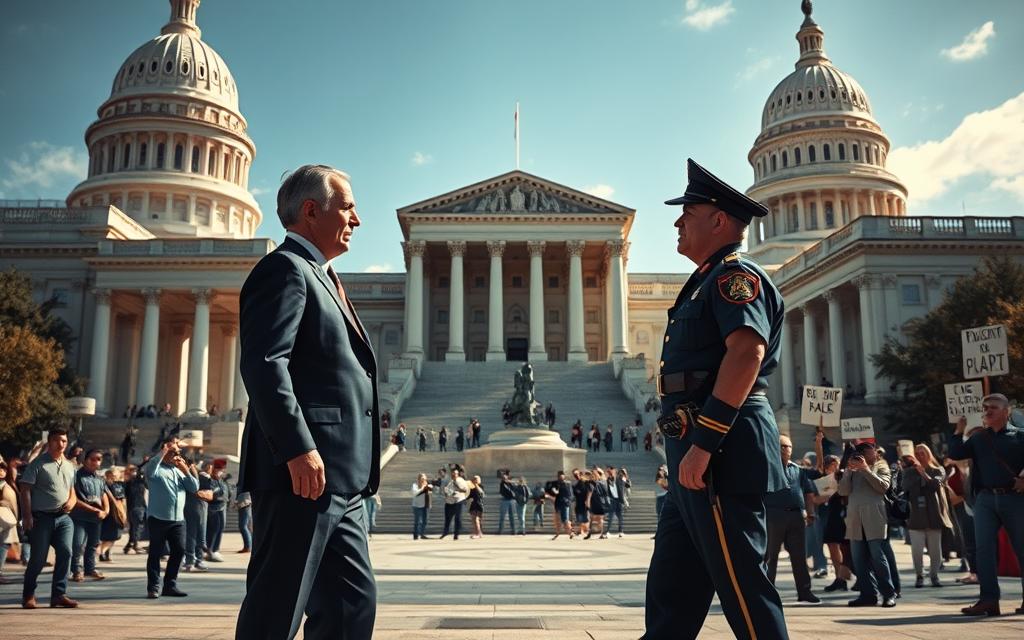
Case Studies in State-Federal Tensions
Cannabis legalization exposes modern conflicts. Twenty-four states allow recreational use despite federal prohibition under the Controlled Substances Act. Courts have upheld Congress’s power to regulate interstate commerce, yet enforcement remains inconsistent, creating legal gray areas.
Immigration policies spark similar clashes. Sanctuary cities limit cooperation with federal agencies, testing the constitution’s supremacy clause. States argue they’re exercising reserved powers under the 10th Amendment, while federal officials cite authority over naturalization rules.
| Conflict Area | Federal Action | State Response |
|---|---|---|
| Highway Funding | Tied to 21-year drinking age | All states complied by 1988 |
| Healthcare | ACA Medicaid expansion | 12 states rejected funds initially |
| Environment | Clean Air Act regulations | Multiple lawsuits filed |
These battles reveal enduring patterns. When Congress uses “shall necessary proper” justifications for laws, states often counter with constitutional originalism arguments. The Supreme Court’s role as referee ensures continuous recalibration of federalism’s boundaries.
Interpretive Challenges: ‘Empty Standard’ Versus ‘Incidental Powers’

Legal scholars remain divided over whether Article I’s final provision grants boundless flexibility or demands strict constraints. Some view the text as an “empty standard” inviting subjective interpretation, while others argue it only permits incidental powers directly tied to listed congressional duties.
Critiques of Broad Judicial Deference
Harvard’s John Manning challenges courts’ traditional leniency toward legislative interpretations. His analysis demands stricter scrutiny of whether laws meet both necessity and propriety tests. This approach would require clearer connections between policies like healthcare reforms and specific constitutional powers.
Modern rulings reveal inconsistent standards. The 2005 Gonzales v. Raich decision upheld federal cannabis bans under interstate commerce authority, while 2012’s ACA ruling narrowly validated healthcare mandates through taxing power. Such contradictions fuel arguments about judicial unpredictability.
Historical Versus Modern Interpretations
Founding-era debates resurface in contemporary litigation. James Madison initially advocated for narrow proper carrying execution of duties, mirroring current originalist arguments. Contrast this with modern administrative state expansions, where agencies routinely exercise unenumerated authorities.
| Interpretive Approach | Key Feature | Legal Impact |
|---|---|---|
| Empty Standard | Allows adaptive governance | Supports climate regulations |
| Incidental Powers | Requires direct constitutional links | Limits drug enforcement scope |
| Balanced Test | Combines historical intent with modern needs | Shapes digital privacy laws |
These competing frameworks ensure continuous reevaluation of congressional authority. As new challenges emerge – from AI regulation to space commerce – the clause remains America’s constitutional wildcard.
Contemporary Relevance in U.S. Governance
Modern governance faces unprecedented challenges that test constitutional boundaries daily. The necessary proper clause remains central to resolving conflicts between legislative innovation and judicial oversight. Recent disputes over student debt relief and agency rulemaking demonstrate its enduring significance.
Ongoing Legislative and Judicial Debates
2023 saw heated arguments about federal authority to cancel $400 billion in student loans. Critics called this overreach under “carrying execution foregoing” powers, while supporters cited historical precedents for economic interventions. Such clashes mirror earlier battles over healthcare reforms and environmental regulations.
Judges increasingly scrutinize agency actions since the decline of Chevron deference. The Supreme Court’s 2022 West Virginia v. EPA decision limited environmental regulations, demanding clearer links to congressional powers. This shift empowers courts to reject policies lacking explicit statutory foundations.
Political polarization amplifies these tensions. Lawmakers propose expansive climate measures while opponents demand strict adherence to constitutional interpretation principles from the founding era. These debates reshape how agencies implement laws on digital privacy and AI governance.
Three emerging trends define modern applications:
- Heightened judicial review of administrative rulemaking
- State challenges to federal mandates in healthcare and education
- Legislative efforts to reclaim authority from executive agencies
As artificial intelligence and space commerce advance, the clause will likely face new tests. Future rulings may determine whether Congress can authorize novel regulatory frameworks or if such power requires constitutional amendments.
Conclusion
American governance continues navigating a constitutional tightrope first strung in 1787. From Hamilton’s national bank defense to modern healthcare mandates, the necessary proper clause remains pivotal in shaping federal authority. Landmark rulings like McCulloch and Comstock demonstrate how judicial interpretations stretch or constrain congressional power.
State-federal tensions persist as new challenges emerge. Cannabis legalization battles and climate policy debates mirror founding-era disputes over proper clause boundaries. Courts now face questions about AI regulation and space commerce – issues unimagined by framers.
This constitutional provision ensures adaptability while demanding restraint. Its dual role as governance tool and check on overreach keeps it central to legal strategy. Future interpretations will likely balance historical intent with evolving societal needs.
As technology advances and political landscapes shift, the clause remains America’s enduring framework for testing federal authority. Its 16 words continue defining what government can – and cannot – achieve through legislation.


Leave a Comment