
Can Someone Press Charges Without Proof? Legal Advice

What happens when accusations fly but evidence remains scarce? Many assume legal action requires ironclad proof, but reality often defies expectations. This article reveals how the justice system navigates murky waters between allegations and convictions.
Law enforcement typically needs probable cause to file criminal charges—a standard lower than courtroom proof. Officers review witness statements, physical clues, and circumstantial patterns. Prosecutors then decide if these elements meet evidentiary thresholds for courtroom battles.
While police usually initiate cases, private citizens can sometimes trigger investigations through formal complaints. However, experienced attorneys emphasize that mere allegations rarely hold up in court. Defense teams frequently challenge weak cases through motions to dismiss or directed verdicts.
The burden of proof evolves throughout proceedings. Initial filings require reasonable suspicion, while trials demand beyond reasonable doubt. This progression ensures multiple checkpoints exist to protect rights and prevent wrongful convictions.
Key Takeaways
- Probable cause standards differ from trial evidence requirements
- Prosecutors assess multiple evidence types before filing charges
- Defense lawyers play critical roles in challenging weak cases
- Burden of proof escalates during different legal phases
- Directed verdicts can terminate insufficiently supported cases
Introduction to the Criminal Charging Process in the United States
Initiating a criminal case involves more than just an accusation—it’s a structured process governed by strict legal protocols. Understanding how allegations transform into formal charges helps clarify common misconceptions about justice system operations.
Defining the Process of Pressing Charges
Filing a police report serves as the first step in addressing alleged criminal activity. This document triggers an investigation but doesn’t guarantee charges. Prosecutors ultimately decide whether evidence meets legal standards for courtroom proceedings.
Victims can report incidents, but law enforcement and district attorneys control case progression. A prosecutor’s review includes assessing witness credibility, physical evidence, and potential jury appeal. Only 1 in 5 reported crimes result in formal charges, according to Bureau of Justice Statistics.
The Role of Law Enforcement and Prosecutors
Police gather initial proof through interviews, surveillance, and forensic analysis. Prosecutors then evaluate if the collected material supports beyond reasonable doubt—the highest evidentiary threshold. Defense attorneys scrutinize these findings for inconsistencies or constitutional violations.
| Stage | Legal Standard | Decision Maker |
|---|---|---|
| Investigation | Reasonable Suspicion | Law Enforcement |
| Charging Decision | Probable Cause | Prosecutor |
| Trial | Beyond Reasonable Doubt | Judge/Jury |
This multi-layered approach prevents rash judgments while protecting defendants’ rights. Kansas v. Cope (2021) reaffirmed prosecutors’ exclusive authority to determine charges, independent of victim preferences.
Factors That Influence the Decision to Press Charges
Legal thresholds determine case viability more than public perception suggests. Prosecutors weigh multiple elements before initiating court actions, guided by criminal law principles and practical realities.

Understanding Probable Cause and Legal Standards
Probable cause requires factual basis beyond gut feelings. Officers must articulate specific reasons—like witness accounts or forensic data—showing crime likelihood. This standard filters out baseless claims while allowing thorough investigations.
Four key differences separate probable cause from suspicion:
- Requires observable facts rather than hunches
- Demands logical connection to criminal activity
- Neutral judges review supporting documentation
- Focuses on objective patterns over personal bias
Evaluating Witness Testimonies and Circumstantial Evidence
Prosecutors often build cases using indirect proof. A shopkeeper’s security footage or a neighbor’s account can establish timelines when direct evidence is missing. Such details help meet burden of proof requirements during early phases.
Challenges arise when witnesses contradict themselves or physical proof degrades. Defense teams frequently target these weaknesses through cross-examination. Yet consistent circumstantial patterns sometimes outweigh isolated eyewitness errors.
Recent rulings emphasize judicial safeguards against overreliance on shaky testimonies. Courts increasingly demand corroboration for critical claims, balancing victim rights with defendant protections.
can someone press charges without proof: An In-Depth Analysis
Legal battles often hinge on what’s missing as much as what’s presented. Prosecutors occasionally file indictments based on limited proof, particularly when public pressure mounts or victim accounts appear credible. A 2022 Michigan study revealed 23% of dismissed cases initially proceeded with only circumstantial evidence.
The Impact of Insufficient Evidence on Charging Decisions
Weak evidence creates domino effects throughout legal proceedings. Domestic violence cases sometimes advance with just testimonies, while property crimes often require physical proof. Defense teams frequently exploit these gaps through pretrial motions to suppress evidence or demand dismissals.
Consider these outcomes from evidence strength analysis:
| Evidence Type | Charge Rate | Conviction Rate |
|---|---|---|
| Forensic + Witness | 78% | 65% |
| Witness Only | 41% | 12% |
| Circumstantial | 33% | 8% |
The Duke Lacrosse case demonstrated how rushed charges collapse under scrutiny. Prosecutors withdrew indictments after forensic reviews contradicted initial claims.
Judicial Safeguards and Procedural Requirements
Courts deploy multiple checkpoints to filter weak accusations. Preliminary hearings require prosecutors to show prima facie evidence before trials proceed. Judges may issue directed verdicts if proof fails to meet basic thresholds during proceedings.
Criminal defense attorneys play pivotal roles in activating these protections. They often challenge evidence chains through suppression motions or witness credibility attacks. In the Brian Banks case, attorney filings exposed fabricated allegations that had led to wrongful conviction.
State laws mandate evidence preservation protocols to prevent degradation of critical proof. These rules help ensure fair evaluations of victim claims while protecting defendants from stale or contaminated evidence.
Evidentiary Requirements and the Role of Prosecutorial Discretion
Building criminal cases demands assembling puzzle pieces that meet strict legal thresholds. Prosecutors sort through evidence types while exercising judgment that shapes outcomes. 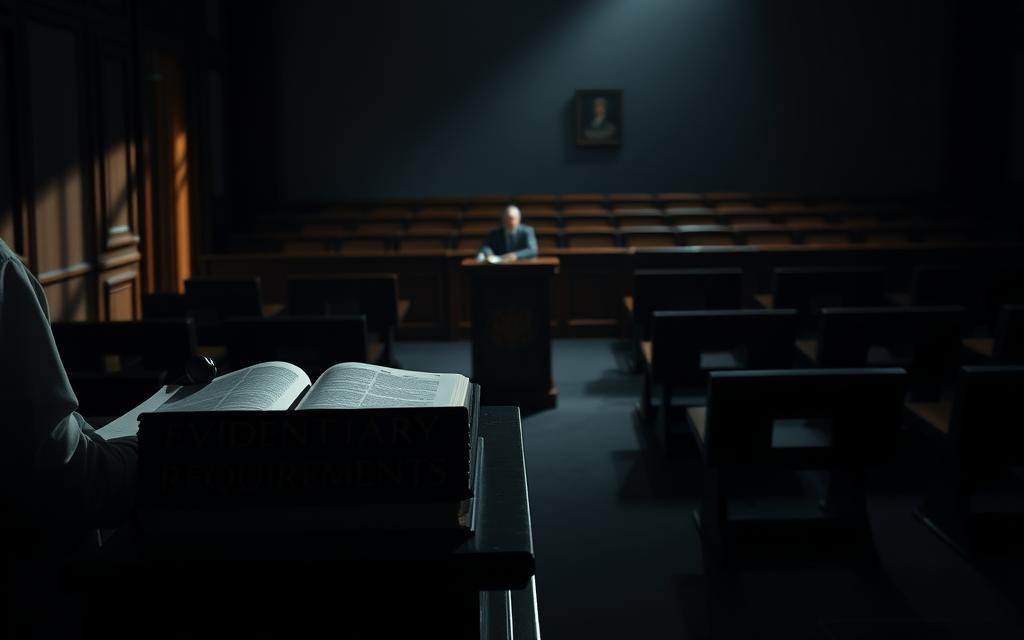
Three primary evidence categories form case foundations:
- Physical proof: DNA, fingerprints, or weapons
- Digital trails: Texts, GPS data, or financial records
- Testimonies: Victim accounts or witness statements
Types of Evidence Considered in Criminal Cases
A police report often kickstarts investigations by documenting initial observations. This official record helps prosecutors evaluate whether to pursue arrest warrants or dismiss claims. Bodycam footage now supplements 43% of reports in violent crime cases.
How Discretion Shapes Charging Outcomes
Prosecutors balance evidence strength against public interest when filing charges. Limited resources mean they prioritize cases with clear criminal defense vulnerabilities. For instance, a shoplifting report might get shelved if surveillance footage contradicts accusers.
This prosecutorial discretion explains why similar cases yield different results. One jurisdiction might dismiss drug possession charges lacking lab tests, while another proceeds based on officer testimony.
Challenges in Cases with Minimal Direct Proof
Attorneys frequently dismantle weak cases by attacking evidence chains. A 2021 study showed 62% of dismissed felonies involved flawed witness accounts. Judges often exclude evidence if defendants prove constitutional violations during collection.
Example: A burglary charge collapsed when criminal defense lawyers proved the police report misidentified stolen items. Such outcomes highlight why early legal counsel proves critical when facing accusations.
Navigating the Legal Process with Experienced Defense Attorneys
Skilled legal counsel becomes essential when facing accusations. Early intervention often determines whether cases proceed or collapse before trial. Defense teams analyze evidence patterns and procedural errors that untrained eyes might miss.

Importance of Securing Legal Representation Early
Contacting attorneys immediately preserves critical rights. Law enforcement must stop questioning suspects once counsel arrives. Lawyers also secure time-stamped information like surveillance footage before it disappears.
Seasoned professionals review probable cause affidavits for flaws. A Texas case saw dismissed criminal charges when attorneys proved an officer misrepresented facts. Early challenges prevent weak accusations from gaining momentum.
Strategies for Challenging Weak Evidence
Defense teams employ multiple tactics to dismantle shaky cases. They file motions demanding proof of lawful evidence collection. Cross-examining witness accounts often reveals inconsistencies that undermine credibility.
Digital evidence analysis forms another key strategy. Attorneys subpoena phone records and location data to create alternative timelines. In a recent New York theft case, text messages proved the accused was miles from the crime scene.
Successful defenses frequently combine technical expertise with courtroom experience. Legal teams prepare judges through pretrial briefs highlighting evidentiary gaps. This proactive approach forces prosecutors to justify their probable cause determinations before trial.
Conclusion
The path from accusation to resolution in the justice system is paved with critical checks and balances. Prosecutors, police officers, and defense teams each shape outcomes through evidence evaluation and procedural rigor. While initial reports may spark investigations, only cases meeting strict evidentiary thresholds progress to trial.
Judicial safeguards like preliminary hearings and directed verdicts filter unsubstantiated claims. Victims and defendants alike benefit from understanding these protections. For example, prosecutors must demonstrate probable cause before proceeding—a standard requiring factual support beyond mere suspicion.
Those facing accusations should consult legal experts immediately. Early intervention often reveals weaknesses in evidence chains or rights violations. As detailed in this analysis of pressing charges without proof, thorough case reviews prevent unjust outcomes.
Though complex, the system prioritizes fairness through layered scrutiny. Proper guidance helps navigate each phase—from initial reports to courtroom resolutions—ensuring rights remain protected at every turn.


Leave a Comment